
Finding Cancer Early
How cancer is diagnosed
Diagnosis usually begins with screening or symptoms, then moves to clinical examination and specialised tests. Screening looks for disease before symptoms appear; diagnosis confirms whether cancer is present and how far it has progressed.
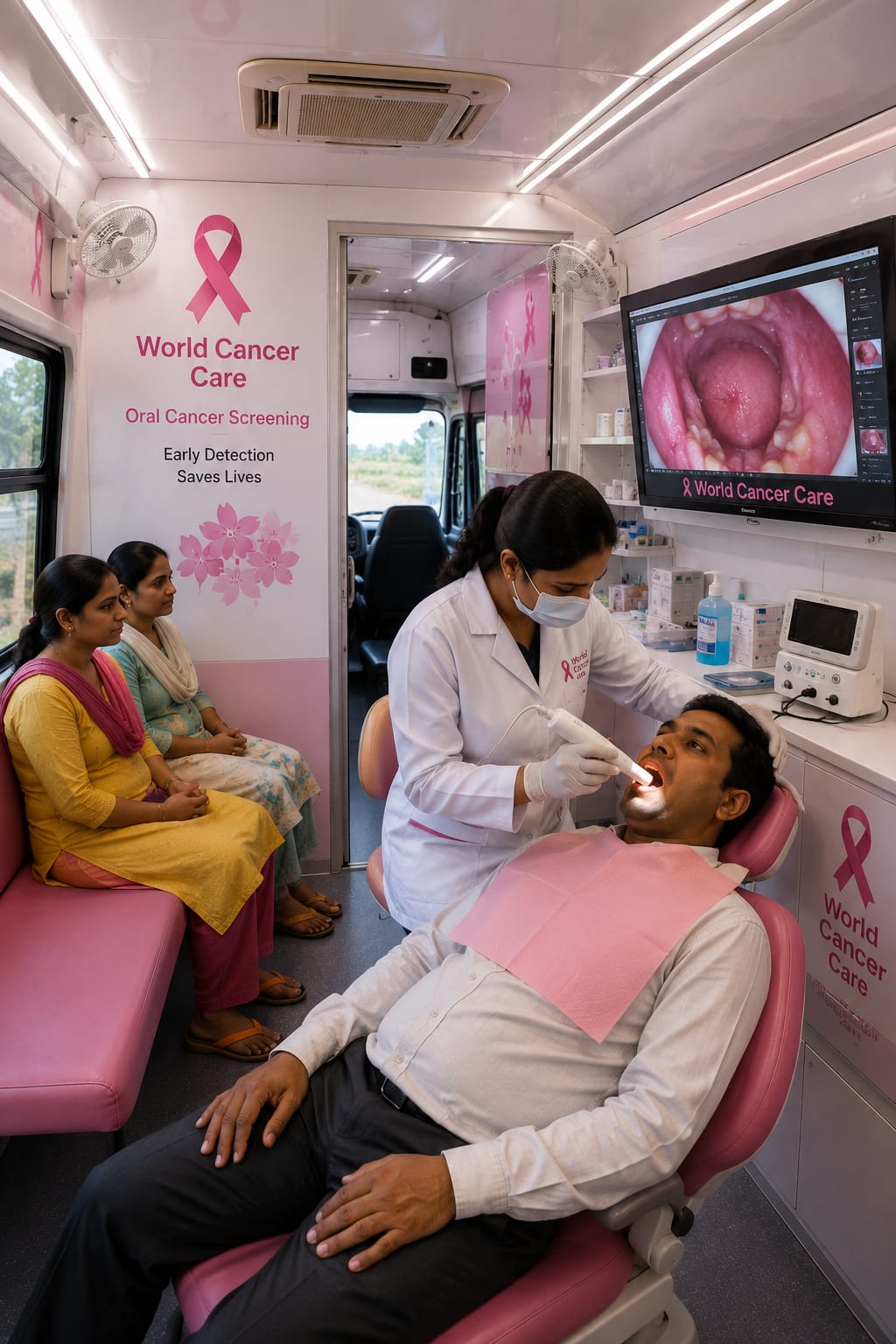
Screening tests offered at our camps
Mammography
Digital X-ray of the breast to detect tumours too small to feel.
Pap smear / cervical
Cervical cell screening to find early changes and cervical cancer risk.
PSA blood test
Prostate-specific antigen testing for men’s prostate health.
Oral & throat exam
Clinical and visual screening where tobacco-related risk is high.
Lab & blood tests
Blood cancer markers and laboratory services for early clues.
Bone density (BMD)
Bone mineral density testing as part of broader health screening.
Further diagnostic steps
- Clinical examination — doctor assesses symptoms, history and physical findings
- Imaging — ultrasound, X-ray, CT, MRI or other scans as advised
- Biopsy / pathology — tissue sample examined to confirm cancer type
- Staging — determining how far the disease has spread to guide treatment
At World Cancer Care camps, every beneficiary is registered with a unique identification number for follow-up. Suspected cases are guided toward further care and appropriate treatment pathways.